


When it comes to storing and transporting liquefied petroleum gas (LPG), the type of cylinder you choose matters more than most people realize. The ongoing debate around composite LPG cylinder vs steel cylinder has gained significant traction in recent years, especially as safety standards evolve and consumer expectations rise. Whether you are a homeowner, a business owner, or part of the energy supply chain, understanding the differences between these two cylinder types can directly impact your safety, convenience, and long-term costs.
This article provides a comprehensive breakdown of composite LPG cylinders and traditional steel cylinders, examining their construction, safety profiles, usability, maintenance needs, and overall suitability for modern use.
Understanding the Two Types of LPG Cylinders
Steel LPG Cylinders
Steel cylinders have been the industry standard for LPG storage for decades. They are manufactured from carbon steel through a process that involves deep drawing and welding, resulting in a robust, rigid container. These cylinders are widely available across the globe and remain the most commonly used vessel for LPG in both domestic and industrial settings.
Steel cylinders are known for their durability and resistance to physical damage. However, they are also prone to corrosion, particularly in humid or coastal environments, which can compromise their structural integrity over time. They require regular inspection and refurbishment to remain safe for continued use.
Composite LPG Cylinders
Composite LPG cylinders are a more recent innovation, constructed from a combination of materials such as a high-density polyethylene (HDPE) liner wrapped with fiberglass or carbon fiber reinforcements. These cylinders are designed to offer a lighter, safer, and more user-friendly alternative to traditional steel options.
The transparent or translucent body of many composite cylinders allows users to check the gas level visually, eliminating the need for a separate gauge. Their non-corroding properties make them particularly appealing in coastal, marine, or humid environments.
Composite LPG Cylinder vs Steel Cylinder: A Detailed Comparison
1. Weight and Portability
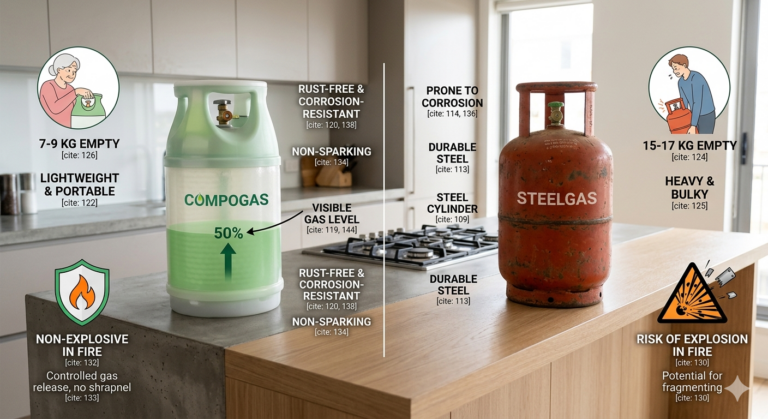
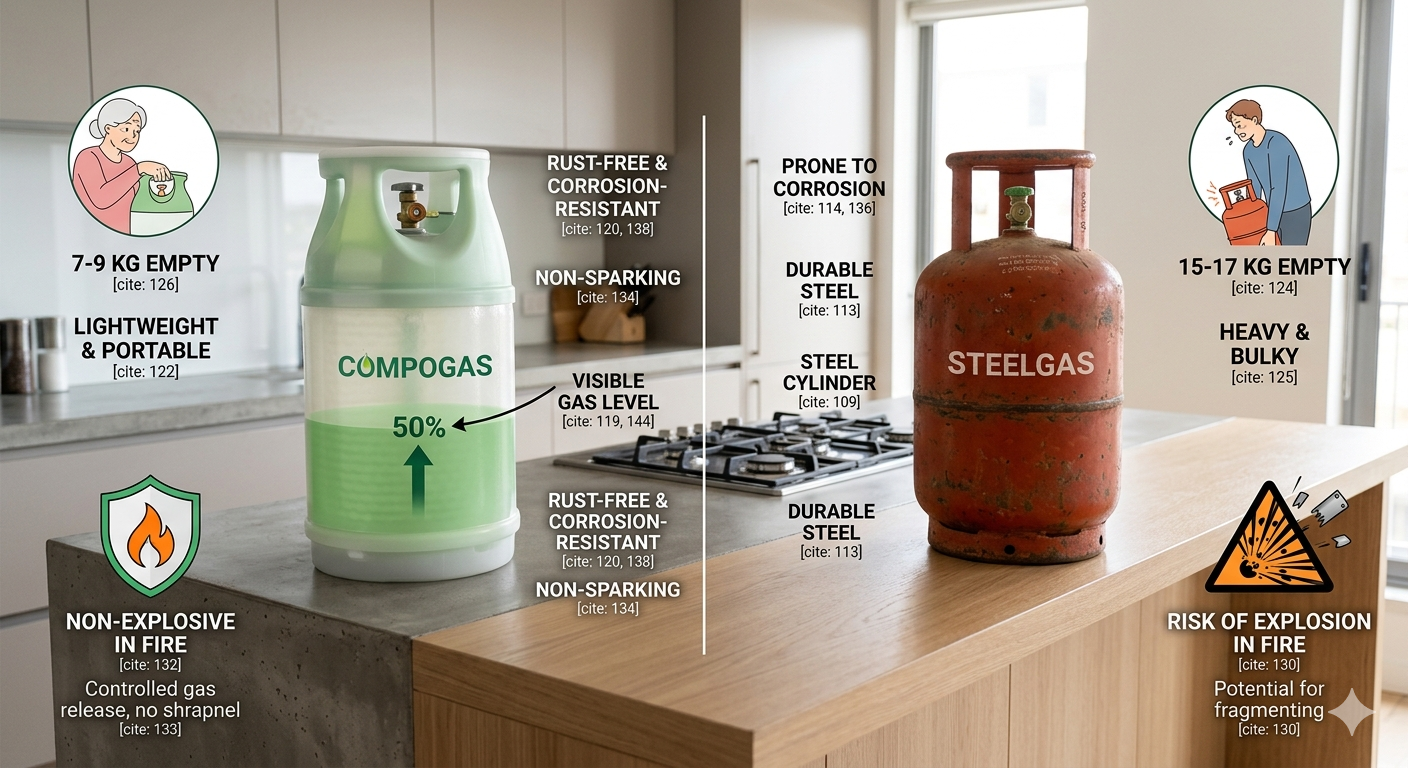
One of the most significant practical differences in the composite LPG cylinder vs steel cylinder comparison is weight. A standard 14.2 kg steel LPG cylinder can weigh between 15 to 17 kg on its own, making the total weight of a full cylinder approach 30 kg or more. This can be a serious challenge for elderly users, people with physical limitations, or anyone who frequently needs to move or replace cylinders.
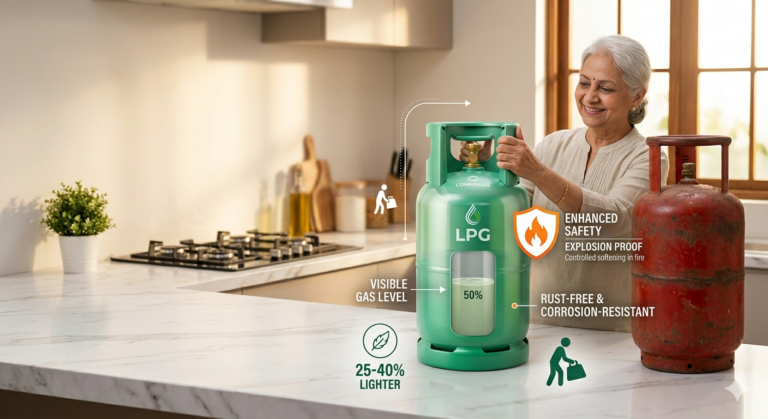
Composite cylinders, on the other hand, can weigh as little as 7 to 9 kg when empty, making them significantly easier to handle, transport, and install. This weight advantage also reduces the risk of injury during routine handling.
2. Safety Features
Safety is a paramount concern when comparing any gas storage solutions. Steel cylinders, when damaged, can explode or shrapnel under extreme conditions, posing serious hazards. While they are built to high standards, aging steel cylinders that have not been properly maintained can develop leaks or structural weaknesses.
Composite cylinders offer a notable safety advantage: they do not explode or fragment in the same manner as steel cylinders during fire exposure. Instead, they tend to split and release gas, which while still hazardous, significantly reduces the shrapnel risk associated with explosions. Additionally, composite cylinders are non-sparking and non-conductive, further reducing the risk of accidental ignition.
3. Corrosion Resistance
Rust and corrosion are the nemeses of steel cylinders. In tropical, coastal, or high-humidity environments, the rate of corrosion can accelerate dramatically. Corroded cylinders are a major safety concern and often need to be taken out of service prematurely, leading to increased costs.
Composite cylinders are entirely immune to rust and corrosion since they are made from non-metallic materials. This gives them a much longer operational lifespan in challenging environmental conditions and reduces the frequency of maintenance and inspection requirements.
4. Gas Level Visibility
With a steel cylinder, there is no direct way to see how much gas remains. Users often rely on lifting the cylinder to estimate weight, or tapping it to hear changes in sound, which can be inaccurate. Running out of gas unexpectedly is a common frustration.
Composite cylinders with translucent bodies allow users to check the gas level at a glance, much like checking a water dispenser. This eliminates guesswork and helps users plan refills in advance, making day-to-day use far more convenient.
5. Aesthetics and Modern Design
Modern kitchens and living spaces are designed with aesthetics in mind. The industrial look of a traditional steel cylinder does not always fit into contemporary interior designs. Composite cylinders, with their sleek finishes, modern colors, and compact profiles, integrate much more seamlessly into residential settings.
Many composite cylinder manufacturers now offer designer versions that can even be displayed openly in kitchens or outdoor cooking areas without looking out of place. This has made them especially popular in European and North American markets.
6. Cost Considerations
In terms of upfront cost, steel cylinders are significantly cheaper to manufacture and purchase. This cost advantage is a major reason they continue to dominate markets in developing countries and regions where price sensitivity is high.
Composite cylinders come with a higher initial price tag. However, when you factor in the longer lifespan, reduced maintenance costs, lower risk of injury-related incidents, and savings from not needing to refurbish or repaint over the years, the long-term total cost of ownership can be quite competitive.
7. Lifespan and Durability
Steel cylinders typically have a service life of 15 to 20 years with proper maintenance, including periodic hydrostatic testing and requalification. However, in corrosive environments, this lifespan can be considerably shorter.
Composite cylinders are rated for similar service lives but do not suffer the degradation associated with corrosion. The materials used in composite construction are engineered to maintain structural integrity over long periods, even under harsh environmental conditions.
Environmental Impact
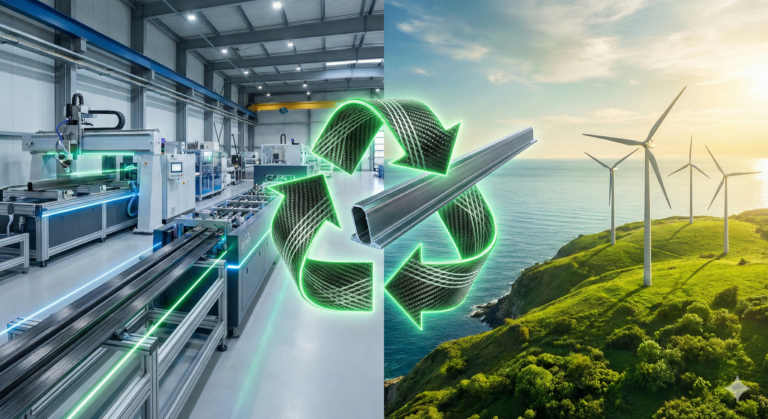
Sustainability is an increasingly important factor in product decisions. Steel cylinders, while recyclable, require energy-intensive manufacturing processes and regular refurbishment that generates waste and emissions. The transportation of heavy steel cylinders also increases fuel consumption and carbon emissions across the supply chain.
Composite cylinders, being lighter, reduce transportation emissions significantly. However, the recyclability of composite materials remains a challenge, as separating the different materials at end-of-life is more complex than melting down steel. Manufacturers are working on more sustainable end-of-life solutions, but this remains an area where composite cylinders still lag behind steel in terms of recyclability.
Which Is Better for Modern Use?
The answer to the composite LPG cylinder vs steel cylinder debate ultimately depends on the specific context and priorities of the user. However, from a modern-use perspective, composite cylinders offer a compelling set of advantages:
- Superior safety during fire incidents due to non-explosive failure modes
- Much lighter weight, improving ease of handling for all users
- Complete immunity to corrosion, extending usable life in harsh environments
- Visible gas level monitoring for added convenience
- Modern aesthetics that blend well into contemporary spaces
- Lower long-term maintenance requirements
Steel cylinders still hold their ground in price-sensitive markets and regions with well-established refurbishment and testing infrastructure. They are rugged, widely understood, and backed by decades of regulatory frameworks.
For residential users in urban or coastal environments, elderly individuals, households with children, or anyone prioritizing safety and ease of use, composite cylinders represent the better modern choice. For large-scale industrial users or markets where cost is the overriding factor, steel cylinders will likely remain the practical standard for the foreseeable future.
Conclusion
The comparison of composite LPG cylinder vs steel cylinder reveals that both have their place in the market, but the tide is clearly shifting toward composite technology as consumer priorities evolve. Safety, convenience, design, and environmental considerations are all pushing users and regulators toward the adoption of composite cylinders.
As composite cylinder technology continues to mature and prices become more competitive, it is likely that they will increasingly replace steel cylinders in domestic and light commercial applications worldwide. For anyone investing in LPG infrastructure today, whether for a home, a restaurant, or a hospitality business, composite cylinders offer a forward-looking, safer, and more user-friendly solution that is well aligned with the demands of modern life.
Ultimately, making an informed choice between these two cylinder types requires assessing your specific environment, usage frequency, budget, and safety priorities. But when viewed through the lens of modern living, composite LPG cylinders are fast becoming the smarter, safer, and more practical choice for households and businesses alike.