


The global energy landscape is undergoing a quiet but significant transformation. While much attention is given to renewables and electric alternatives, liquefied petroleum gas (LPG) continues to serve billions of households and businesses worldwide as a reliable, affordable cooking and heating fuel. What is changing, however, is how that gas is stored. LPG composite cylinder advantages are rapidly reshaping industry standards, consumer expectations, and regulatory frameworks across the world.
For decades, heavy steel cylinders have been the default vessel for LPG storage. They are familiar, widely available, and inexpensive to produce. But as safety demands increase, urbanization accelerates, and consumers become more discerning, the limitations of steel cylinders are becoming harder to overlook. Composite LPG cylinders have emerged as a powerful answer to these challenges, offering a combination of safety, convenience, and modern design that steel simply cannot match.
This article explores in depth why composite LPG cylinders are not just a passing trend but a genuine leap forward in gas storage technology, and why they are widely regarded as the future of the industry.
What Is a Composite LPG Cylinder?
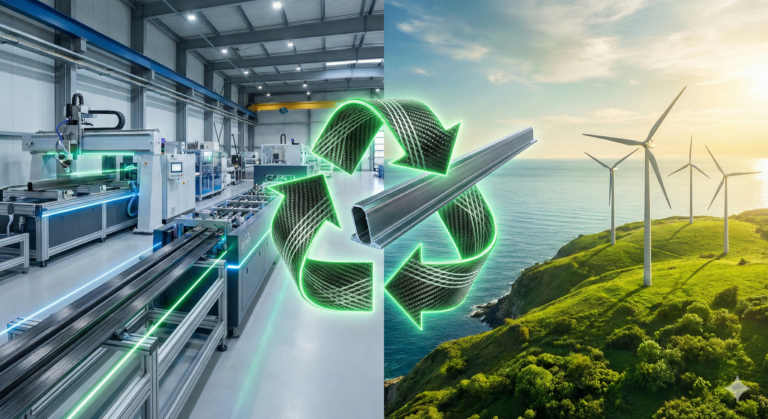
A composite LPG cylinder is constructed using a multi-layer design. At its core is a liner, typically made from high-density polyethylene (HDPE) or polyamide, which holds the gas. This liner is then wrapped in multiple layers of high-strength fiberglass or carbon fiber using a process called filament winding. The result is a cylinder that is structurally superior in several key respects compared to its all-steel counterpart.
The composite construction is not simply a cosmetic upgrade. It fundamentally changes how the cylinder behaves under stress, heat, and physical impact, producing measurable improvements in safety and usability. Understanding these improvements is central to appreciating the full scope of LPG composite cylinder advantages.
The Core LPG Composite Cylinder Advantages
1. Dramatically Reduced Weight
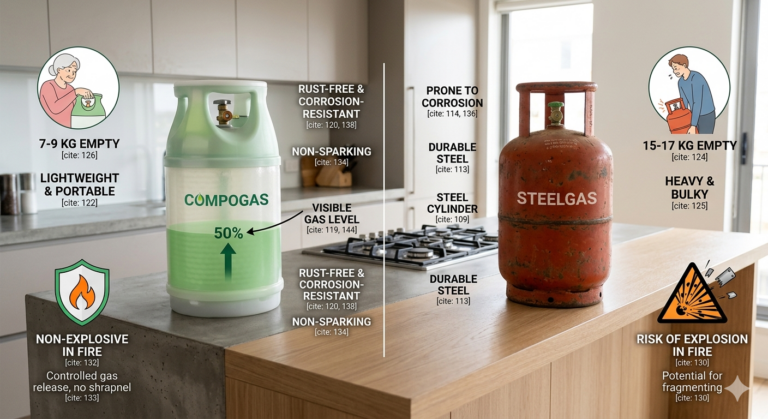
Perhaps the most immediately noticeable of all LPG composite cylinder advantages is the drastic reduction in weight. A standard 14.2 kg steel LPG cylinder weighs approximately 15 to 17 kg when empty, meaning a full cylinder can weigh close to 32 kg. For many users, especially the elderly, women, and those with physical limitations, this weight makes handling, transporting, and installing cylinders genuinely difficult and potentially dangerous.
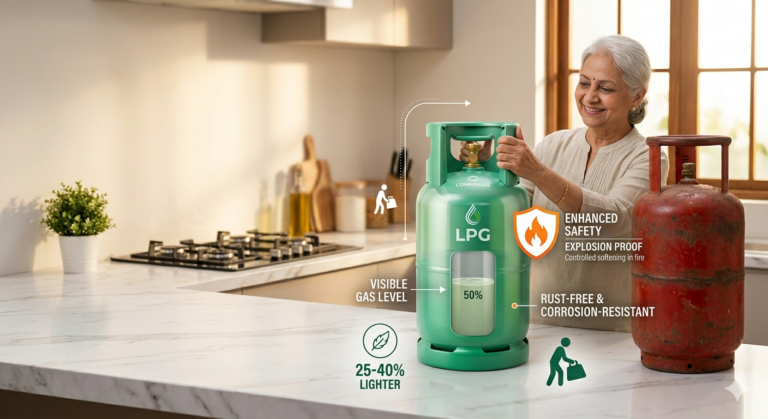
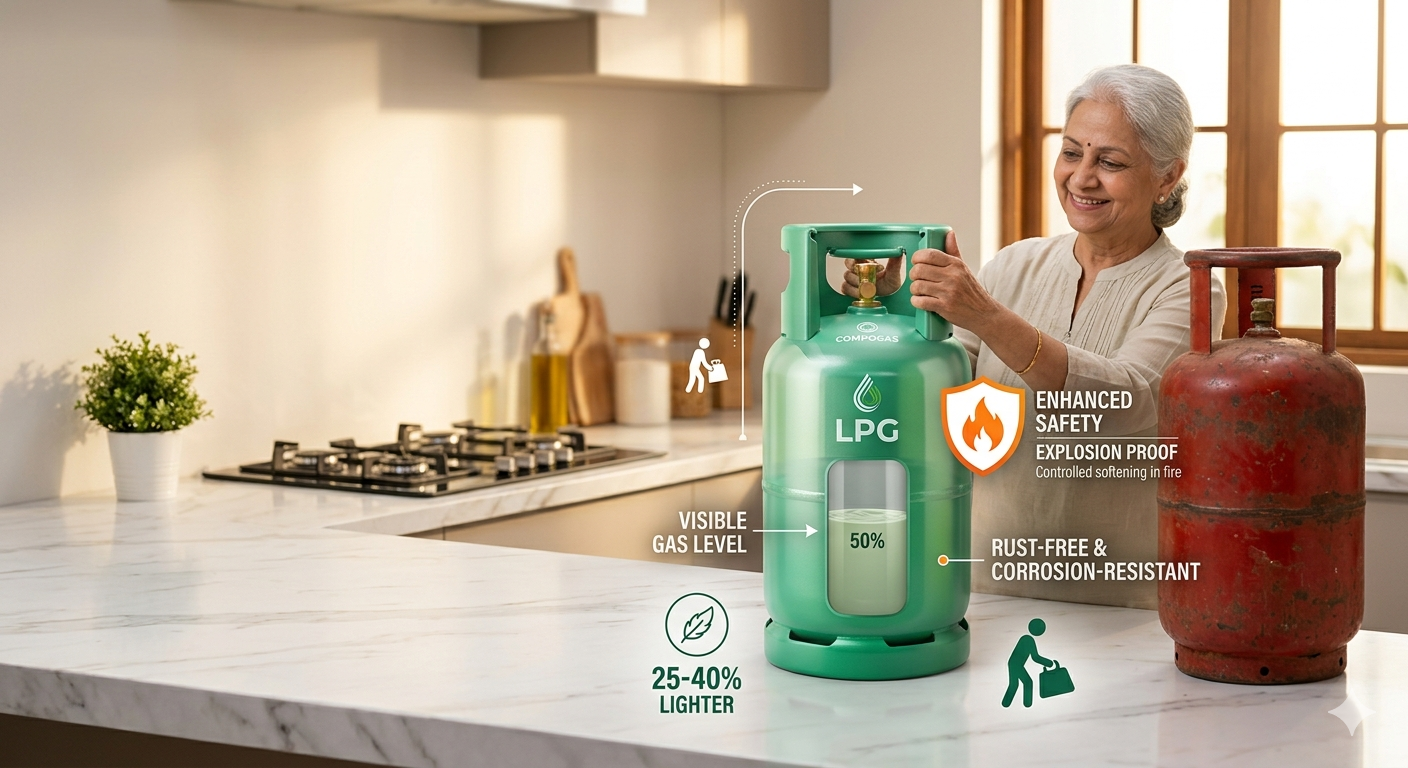
Composite cylinders of equivalent gas capacity typically weigh between 7 and 10 kg when empty. This means a full composite cylinder may weigh under 25 kg, representing a weight saving of 25 to 40 percent compared to steel. This is not merely a matter of comfort. It translates to fewer workplace injuries during delivery and installation, easier emergency handling, and greater accessibility for a wider range of users.
In logistics and distribution, the weight advantage is also economically significant. Delivery vehicles can carry more cylinders per trip, reducing fuel consumption and transportation costs across the supply chain.
2. Enhanced Safety Performance
Safety is at the top of the list when evaluating LPG composite cylinder advantages, and for good reason. LPG is a flammable gas, and the consequences of a cylinder failure can be catastrophic. Steel cylinders, when exposed to fire or extreme heat, can rupture violently or even explode, sending shrapnel in all directions and causing severe injuries or fatalities.
Composite cylinders behave very differently under the same conditions. Due to the nature of the fiberglass and polymer materials, a composite cylinder exposed to fire will soften and split along a controlled path rather than exploding. This characteristic, often described as a leak-before-burst failure mode, significantly reduces the risk of deadly fragmentation. While any LPG release in a fire situation remains hazardous, the elimination of the explosion risk is a substantial safety improvement.
Additionally, composite cylinders are non-sparking and non-conductive. This means that even in situations involving electrical faults or static discharge, composite cylinders do not contribute to ignition risks the way metal cylinders can in certain industrial environments.
3. Total Immunity to Corrosion
Rust and corrosion are the most persistent threats to the lifespan and safety of steel LPG cylinders. In coastal regions, tropical climates, and any environment with high humidity, steel cylinders can begin to corrode relatively quickly. Corrosion weakens the cylinder wall, creates potential leak points, and eventually renders the cylinder unsafe and unusable. Managing this corrosion requires regular inspection, repainting, and in many cases, early retirement of the cylinder from service.
One of the standout LPG composite cylinder advantages is that composite materials do not rust or corrode under any normal operating conditions. Fiberglass and HDPE are inherently resistant to moisture, saltwater, and atmospheric oxidation. This makes composite cylinders an ideal solution for marine applications, beachside properties, tropical households, and any setting where steel would deteriorate quickly.
The elimination of corrosion also means that composite cylinders maintain their structural integrity and appearance throughout their operational life with minimal maintenance, reducing the total cost of ownership significantly over time.
4. Visible Gas Level Monitoring
Running out of gas mid-cooking is a frustration familiar to almost every LPG user. With steel cylinders, there is no direct way to gauge remaining gas levels without specialized equipment. Users typically resort to estimating weight by lifting the cylinder or tapping its side to listen for sound changes, both of which are imprecise and unreliable methods.
Many composite LPG cylinders are manufactured with a semi-transparent or translucent outer shell that allows users to see the liquid gas level directly, similar to how one might check a water bottle or fuel canister. This visual transparency is one of the most practically useful LPG composite cylinder advantages from a consumer standpoint. It enables users to plan refills in advance, avoid the inconvenience of unexpected outages, and manage their gas supply more efficiently.
5. Long Service Life and Reduced Maintenance
Steel cylinders require periodic requalification, typically every five to ten years depending on the regulatory regime in a given country. This requalification involves hydrostatic pressure testing, visual inspection, and often repainting. Cylinders that fail inspection are taken out of service, contributing to waste and replacement costs.
Composite cylinders are rated for comparable or longer service lives but require significantly less maintenance. Because they do not corrode, they retain their structural integrity without the need for repainting or anti-rust treatments. The reduced maintenance burden is a meaningful advantage for both individual consumers and large-scale gas distributors managing thousands of cylinders.
6. Modern Aesthetics and Design Versatility
Today’s consumers pay close attention to the look and feel of every product in their home, including utility items like gas cylinders. The bulky, industrial appearance of a traditional steel cylinder often clashes with modern kitchen designs and living spaces. Composite cylinders, by contrast, can be manufactured in a wide variety of colors, shapes, and finishes, allowing them to complement rather than detract from a home’s aesthetic.
In European markets particularly, designer composite cylinders have become popular items that can be displayed openly in kitchens, on patios, or in outdoor entertaining areas. This aesthetic flexibility is another dimension of LPG composite cylinder advantages that resonates strongly with premium and urban consumer segments.
7. Lower Environmental Footprint in Transport
While composite materials present some end-of-life recycling challenges, their significantly lower weight delivers a measurable environmental benefit during the transportation phase of their lifecycle. Delivery trucks carrying composite cylinders can transport more units per trip or use less fuel for the same load, reducing per-unit carbon emissions during distribution.
For large distributors operating fleets of delivery vehicles across wide geographic areas, this weight-driven efficiency gain can translate into meaningful reductions in fuel costs and greenhouse gas emissions over time. As environmental regulations tighten globally, this logistical advantage will become increasingly valuable.
Growing Global Adoption
The recognition of LPG composite cylinder advantages is reflected in their growing adoption across diverse markets. In Europe, composite cylinders have become mainstream in several countries, with regulators actively encouraging the transition away from steel. In the Middle East, large-scale tenders for composite cylinders have been issued by national energy companies seeking to modernize their distribution infrastructure.
In Asia and South Asia, where LPG is a primary cooking fuel for hundreds of millions of households, pilot programs and gradual market introductions of composite cylinders are underway. The initial cost barrier remains a challenge in price-sensitive markets, but government subsidies, awareness campaigns, and increasing manufacturing scale are helping to close the price gap between composite and steel options.
International safety standards organizations, including ISO and EN certification bodies, have developed specific standards for composite LPG cylinders, providing a regulatory framework that facilitates their broader adoption. This standardization has been crucial in building trust among distributors, regulators, and consumers alike.
Challenges and Considerations
No technology is without its limitations, and composite cylinders are no exception. The most significant barrier to adoption remains upfront cost. Composite cylinders can cost two to four times as much as equivalent steel cylinders at the point of manufacture. For markets where consumers or distributors purchase cylinders outright rather than renting them, this cost differential is a meaningful obstacle.
End-of-life disposal is another area requiring attention. While steel cylinders can be straightforwardly recycled as scrap metal, composite cylinders require specialized processing to separate the polymer liner from the fiberglass wrapping. The infrastructure for composite cylinder recycling is still developing in many parts of the world.
Additionally, composite cylinders require different handling protocols in some respects. While they are more resistant to corrosion, the fiberglass surface can be damaged by certain chemicals or abrasive contact, and users need to be educated on proper care and storage.
Despite these challenges, the trajectory is clear. As manufacturing volumes increase and technology matures, the cost of composite cylinders will continue to decline, making the comprehensive set of LPG composite cylinder advantages accessible to a broader global market.
Who Benefits Most from Composite LPG Cylinders?
While the advantages of composite cylinders are broadly applicable, certain user groups and use cases benefit especially strongly:
- Elderly users and individuals with physical limitations who struggle to lift and maneuver heavy steel cylinders
- Coastal and tropical households where corrosion significantly shortens the lifespan of steel cylinders
- Marine and recreational vehicle users who need lightweight, rust-proof gas storage
- Premium residential users who value modern design and seamless kitchen aesthetics
- Hospitality businesses such as hotels and restaurants where safety and aesthetics are both critical
- LPG distributors seeking to reduce logistics costs and improve operational efficiency
Conclusion
The evidence supporting LPG composite cylinder advantages is both broad and compelling. From the dramatic reduction in weight and the elimination of corrosion to the superior safety profile during fire incidents and the ability to visually monitor gas levels, composite cylinders represent a genuine technological advancement over traditional steel cylinders.
The transition from steel to composite LPG cylinders is not simply a matter of consumer preference. It reflects a broader shift in how societies think about safety, sustainability, and quality of life. As regulations tighten, consumer expectations rise, and manufacturing costs fall, composite cylinders are poised to become the global standard for LPG storage in domestic and light commercial applications.
For consumers making a purchasing decision today, and for businesses and policymakers shaping the future of LPG infrastructure, embracing composite cylinder technology is not just a smart choice, it is a forward-thinking investment in safety, efficiency, and the long-term sustainability of gas storage solutions. Composite LPG cylinders are not merely the future of safe and lightweight gas storage; in many ways, that future has already arrived.