



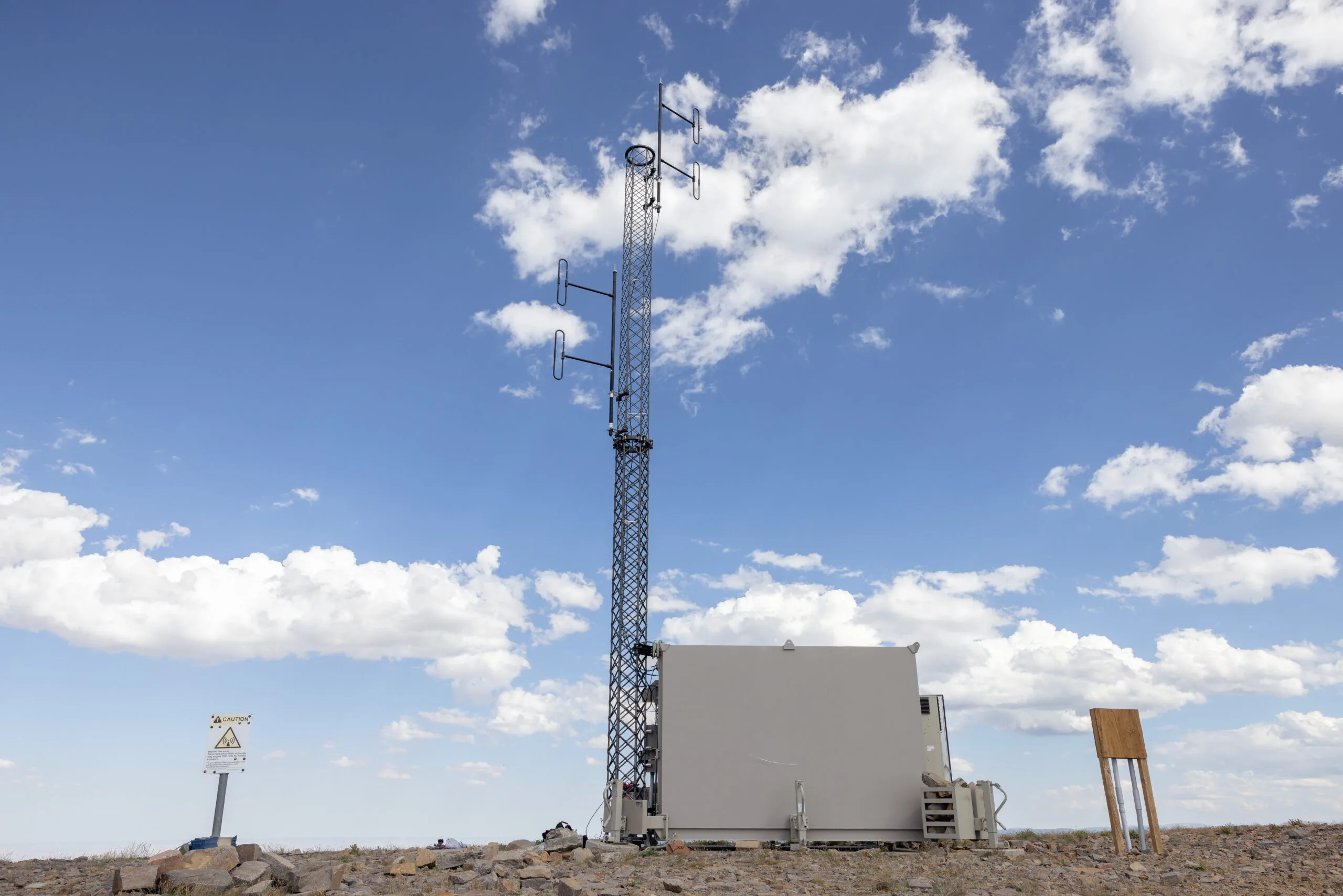
The telecommunications industry stands at a pivotal moment in its evolution. As we navigate through 2026, the infrastructure that connects our world is undergoing a remarkable transformation—one that’s being driven by the quiet revolution of advanced composite materials. This isn’t just about replacing old materials with new ones; it’s about reimagining what’s possible in network infrastructure design and deployment.
Think about the challenge facing telecom operators today: fiber networks expanding into remote regions, 5G towers rising in urban centers, and smart cities demanding robust, reliable connectivity. Traditional materials like steel and aluminum have served us well for decades, but they’re showing their age. They rust in coastal environments, add excessive weight to installations, and require constant maintenance. Enter composite materials in telecom infrastructure—lightweight, corrosion-resistant, and built to last a generation.
At Super India Group, we’ve watched this transformation unfold firsthand. From FRP rods strengthening fiber optic cables beneath our streets to pultruded composite structural profiles supporting equipment frames on rooftops, composites are reshaping how telecom networks are designed, built, and maintained.
The Rise of FRP Rods in Fiber Optic Networks: A Game-Changer for Cable Strength
Let’s start with one of the most critical—yet often overlooked—applications: FRP rods for fiber optic cable reinforcement. If you’ve ever wondered how fiber cables maintain their integrity through underground conduits, across aerial spans, or underwater, the answer often lies in these remarkable reinforcement members.
Fiber networks face a unique engineering challenge. They need strength to withstand tension and environmental stress, but they can’t use traditional metal reinforcement. Why? Because metal conducts electricity, which can interfere with signal transmission and create safety hazards during lightning strikes or electrical faults. This is where FRP (Fiber Reinforced Polymer) rods become indispensable.
Why FRP Rods Excel in Telecom Applications
The benefits of FRP rods in fiber optic cables aren’t just theoretical—they’re proven in millions of installations worldwide:
High Tensile Strength That Rivals Steel: Modern FRP rods deliver tensile strengths exceeding 1,500 MPa, comparable to high-grade steel, but at a fraction of the weight. This means cables can span longer distances without additional support structures, reducing installation costs and complexity.
Perfect Electrical Non-Conductivity: Unlike metallic strength members, FRP rods are completely non-conductive. This eliminates electromagnetic interference, prevents ground loops, and ensures safety during lightning events—a critical consideration for aerial installations where lightning strikes are a constant threat.
Exceptional Moisture Resistance: Whether buried underground or submerged underwater, FRP rods maintain their structural integrity for decades. They don’t absorb water, swell, or degrade like some materials, making them ideal for harsh environments like coastal regions or monsoon-prone areas.
Superior Dimensional Stability: Temperature fluctuations that cause metal cables to expand and contract can stress delicate fiber optics. FRP rods exhibit minimal thermal expansion, protecting the glass fibers from micro-bending losses that degrade signal quality over time.
Reliable Thermal Performance: From the sub-zero temperatures of mountain passes to the scorching heat of desert installations, FRP rods for telecom maintain consistent performance across extreme temperature ranges, ensuring network reliability in any climate.
At Super India Group, we’ve supplied FRP rods for countless fiber deployments, and we’ve seen firsthand how they’ve transformed cable reliability. Network operators report dramatically reduced maintenance calls and longer cable lifespans—some installations have exceeded 25 years without any degradation in performance.
Lightweight Composite Telecom Components: Speed Meets Simplicity
If you’ve ever watched a crew install equipment on a telecom tower, you know it’s physically demanding work. Heavy components must be carefully lifted to significant heights, often in challenging weather conditions. This is where lightweight composite telecom components are revolutionizing field operations.
Consider a typical tower upgrade scenario. Traditional steel equipment frames might weigh several hundred pounds, requiring multiple workers, heavy lifting equipment, and hours of careful maneuvering. Replace those with composite telecom components, and the weight drops by 60-70%, while strength remains equivalent or superior. What does this mean in practical terms?
Real-World Advantages of Lightweight Composites
Dramatically Faster Field Installation: Lighter components mean faster installation. A tower upgrade that once took two days can now be completed in one. This accelerates network rollout schedules and gets services to customers faster.
Significant Transport Cost Reduction: When your components weigh half as much, you can transport twice as much equipment per truck. This cuts logistics costs substantially, especially for rural deployments where equipment might travel hundreds of miles.
Reduced Tower Stress Load: Every pound matters on a tower. Lighter equipment means existing towers can support more technology without structural reinforcement. For older towers approaching their load capacity, composite materials can enable upgrades that would otherwise be impossible.
Enhanced Safety and Easier Handling: Working at height is inherently dangerous. Lighter components reduce physical strain on technicians and minimize the risk of accidents. Two workers can safely handle components that previously required three or four, improving both safety and efficiency.
We’ve seen operators reduce their installation crews from five people to three simply by switching to lightweight composite components. That’s not just a cost saving—it’s a fundamental improvement in how telecom infrastructure gets built.
Corrosion Resistance: The Silent Infrastructure Killer That Composites Eliminate
Here’s something most people don’t think about: corrosion costs telecom operators billions of dollars annually in maintenance, repairs, and premature equipment replacement. Metal infrastructure looks solid and permanent, but in reality, it’s constantly under attack from its environment.
Coastal installations face salt spray. Industrial areas deal with chemical pollutants. Even supposedly “clean” environments have corrosive elements in rain and humidity. Over time, this relentless assault degrades metal components, leading to structural weakness, equipment failures, and safety hazards. Corrosion-resistant composite materials for outdoor telecom networks offer a permanent solution to this persistent problem.
Why Composites Win the Corrosion Battle
Truly Rust-Free Performance: Composite materials don’t rust, period. There’s no oxidation, no gradual degradation, no protective coating to maintain. A composite telecom component installed today will look virtually identical decades from now.
Impressive Chemical Resistance: Acid rain, industrial emissions, cleaning chemicals—composites shrug off chemical exposure that would corrode metal in months. This makes them ideal for installations near factories, power plants, or other industrial facilities.
Excellent UV Stability: Constant sun exposure degrades many materials through UV radiation. Modern composite materials incorporate UV inhibitors that protect against photodegradation, ensuring color stability and mechanical properties remain unchanged even after decades of sun exposure.
Dramatically Reduced Maintenance Costs: No painting, no coating replacement, no corrosion inspection. The maintenance activities that consume significant time and budget with metal infrastructure simply disappear with composites.
Extended Service Life: While steel structures might need replacement after 15-20 years in harsh environments, properly designed composite structures can last 50+ years. That’s not just longer service—it’s potentially the only installation needed in an operator’s planning horizon.
One coastal operator we work with at Super India Group calculated that switching to corrosion-resistant composites reduced their annual maintenance budget by 40%. More importantly, their network reliability improved because corrosion-related failures became virtually non-existent.
Pultruded Composites: The Versatile Building Blocks of Modern Telecom
If you’re not familiar with pultrusion, think of it as continuous extrusion for composites. Fibers are pulled through a resin bath and then through a heated die, creating uniform profiles with excellent mechanical properties and precise dimensions. The result is pultruded composites for telecom that serve as the structural skeleton of modern network infrastructure.
Where Pultruded Composites Make a Difference
Cable Trays and Ladder Systems: In data centers and central offices, pultruded composite cable trays support thousands of cables while remaining non-conductive and fire-resistant. They’re lighter than metal trays, easier to install, and never corrode—even in humid basement environments.
Structural Channels and Beams: From equipment racks to mounting frames, pultruded structural profiles provide the rigid support that telecom equipment demands. They match or exceed steel’s stiffness at a fraction of the weight, and they can be easily cut and drilled on-site like wood.
Equipment Frames and Enclosures: Outdoor equipment cabinets face harsh conditions. Pultruded composite frames provide structural integrity without the corrosion problems of metal, while their non-conductive properties enhance electrical safety.
Support Ladders and Walkways: For technician access to rooftop equipment, pultruded ladder systems offer superior safety. They’re non-slip when wet, electrically non-conductive for safety near antennas, and require zero maintenance compared to painted steel alternatives.
Versatile Mounting Systems: From antenna brackets to equipment shelves, pultruded profiles can be fabricated into countless configurations. Their dimensional consistency ensures parts fit together perfectly, even when manufactured months apart.
The modular nature of pultruded composites means infrastructure can evolve with technology. Need to add capacity? Simply install additional profiles. No welding, no special tools—just bolt-together simplicity that accelerates upgrades and modifications.
Electrical Safety Through Non-Conductive Design
Let’s talk about something that doesn’t get enough attention: worker safety around high-power RF equipment and electrical systems. Telecom sites can be hazardous environments, with multiple electrical systems, high-voltage feeds, and powerful antennas all concentrated in relatively small spaces.
Traditional metal infrastructure creates potential hazards. A misplaced tool, an accidental contact, or a ground fault can create dangerous situations. Composite materials fundamentally improve safety by incorporating electrical insulation into the structure itself.
Built-in Electrical Insulation: Unlike metal that conducts electricity, composites are inherently non-conductive. This creates an additional layer of protection for technicians working around energized equipment.
Simplified Grounding Systems: When structural components don’t conduct electricity, grounding design becomes simpler and more effective. You can focus on grounding the equipment that needs it, without worrying about creating ground loops through structural members.
Lightning Strike Protection: In areas prone to lightning, non-conductive composite structures don’t provide alternate paths for lightning current, reducing the risk of side-flash and equipment damage.
Reduced Arc Flash Hazards: Non-conductive materials can’t participate in arc flash events, providing inherent protection in environments with high electrical energy.
Safety isn’t just about compliance—it’s about protecting the people who keep our networks running. Every accident prevented, every injury avoided represents not just a human benefit but also operational continuity and reduced liability.
Smart Infrastructure: Where Composites Meet IoT
The next frontier in telecom infrastructure isn’t just about better materials—it’s about smarter systems. The convergence of composite materials and IoT technology is creating infrastructure that can monitor itself, predict maintenance needs, and optimize performance in real-time.
Here’s why composites are ideal for smart infrastructure integration:
Sensor-Friendly Properties: The non-conductive nature of composites makes them ideal for embedding sensors. Strain gauges, temperature monitors, and moisture sensors can be integrated directly into composite structures without electrical interference concerns.
Transparent to RF Signals: IoT devices typically communicate wirelessly. Composite structures don’t block or interfere with RF signals the way metal does, ensuring reliable data transmission from embedded sensors to monitoring systems.
Environmental Monitoring: Imagine cable trays that can detect water intrusion before it damages equipment, or structural members that alert you when stress loads approach design limits. Composite infrastructure with embedded sensors makes this possible.
Predictive Maintenance Capabilities: By continuously monitoring structural health, operators can shift from reactive maintenance (fixing things when they break) to predictive maintenance (addressing issues before they become problems). This reduces downtime and extends equipment life.
The smart city vision requires smart infrastructure. As networks become more complex and critical to daily life, having infrastructure that can report its own health status becomes increasingly valuable. Composite materials provide the foundation for this intelligent infrastructure.
The Future is Composite: Why This Transformation Matters
As we look toward the future of telecommunications infrastructure, one thing becomes abundantly clear: the adoption of composite materials in telecom infrastructure isn’t just a trend—it’s a fundamental shift in how we build and maintain the networks that connect our world.
The performance advantages are compelling: lighter weight, superior corrosion resistance, excellent electrical properties, and lower lifecycle costs. But beyond the technical specifications, there’s a bigger story here about enabling the next generation of connectivity.
5G networks require denser infrastructure with more cell sites and more equipment at each location. Rural broadband initiatives demand cost-effective solutions that can withstand remote, harsh environments with minimal maintenance. Smart cities need infrastructure that can evolve and adapt as technology progresses. Composite materials address all these challenges.
From FRP rods that strengthen fiber cables beneath our streets to pultruded composite structural systems that support equipment on tower tops, these materials are becoming essential to modern network deployment. They’re not replacing traditional materials just because they’re new—they’re replacing them because they’re demonstrably better for the demanding requirements of 21st-century telecommunications.
At Super India Group, we’ve been at the forefront of this transformation, providing high-quality composite solutions to telecom operators who understand that infrastructure decisions made today will impact network performance for decades to come.
The questions for telecom operators are no longer “Should we use composites?” but rather “Where should we use them next?” and “How quickly can we transition?” The performance and lifecycle advantages are simply too significant to ignore.
As networks continue to evolve—with 6G on the horizon, edge computing expanding, and new services emerging—the infrastructure foundation becomes more critical than ever. Composite materials provide that foundation: reliable, durable, and ready for whatever comes next in the ever-changing world of telecommunications technology.